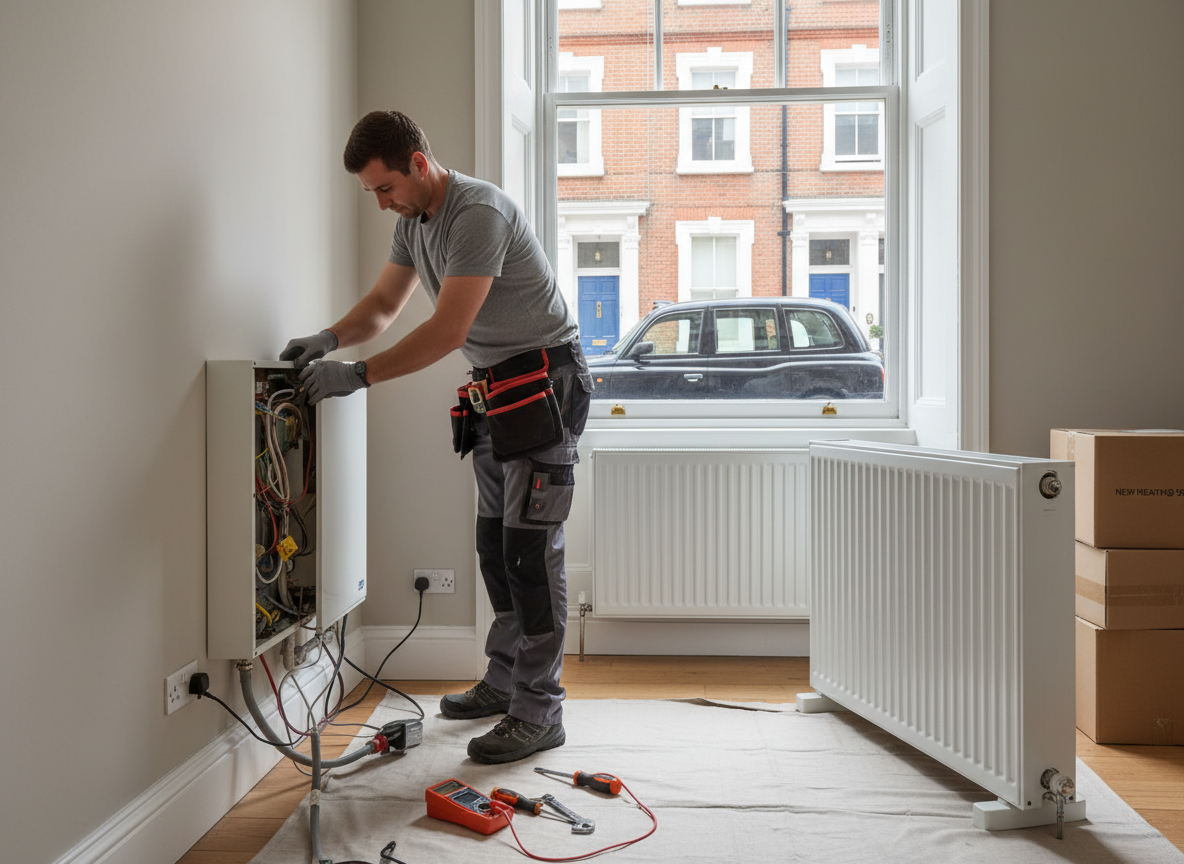
London's housing stock ranges from Victorian terraces in Southwark and Lambeth to mid-century flats near Westminster Bridge Road. Replacing electric heating here often means working around outdated radial circuits and consumer units that predate modern load demands. Installers must check for shared risers in converted buildings and account for limited access in basements or roof spaces common in the area. Weather exposure on external walls can also affect insulation choices and heater placement to prevent condensation issues during damp winters.
Modern replacements typically involve panel heaters or storage heaters with smart controls that integrate with existing 24-hour tariffs. Edge cases include properties where the incoming supply needs upgrading before new units can be fitted, especially in older terraces where multiple extensions have altered the original layout. Regulations require compliance with Part P electrical safety standards and notification to building control for certain works. Homeowners should expect disruption during removal of old night-storage units, which often contain asbestos linings that require specialist handling.
Terrain and soil conditions around the Thames affect ground-floor installations where damp proofing may be compromised. Replacement jobs frequently reveal corroded fixings or inadequate ventilation behind existing heaters. Upfront site surveys are essential because each property's electrical infrastructure differs based on its age and previous modifications. This approach avoids mid-job surprises that extend timelines in dense urban settings like those around SE1.
Common Pitfalls in London Replacements
Homeowners often overlook the need to upgrade distribution boards before fitting higher-output heaters, leading to tripped breakers during cold snaps. Always verify cable sizes against current draw requirements rather than assuming existing runs suffice.
Technician insight
In London, the thing that catches most people out with electric heating replacement is the state of pre-1970s consumer units in terraces near Westminster Bridge Road – they frequently lack the capacity or RCD protection needed for new heaters, forcing an unplanned board upgrade mid-job.
Southwark Terrace Replacement
Old storage heaters failed during a cold spell. Inspection revealed undersized cables and a fuse box without RCDs. We removed the units, upgraded the relevant circuits and installed modern panel heaters with timers. The system now runs efficiently without tripping and meets current safety standards.
How it works
- 1
Initial Assessment
Visit the property to inspect existing heaters, wiring condition and consumer unit capacity in London homes.
- 2
Removal of Old Units
Safely disconnect and remove outdated electric heating while checking for asbestos or damaged cabling.
- 3
Installation of New System
Fit modern electric heaters suited to the room layout and connect to upgraded circuits where required.
- 4
Testing and Handover
Perform full electrical tests, demonstrate controls and provide documentation for the new installation.
Pricing
Upfront quotes provided after site visit because property age and wiring condition affect final costs.