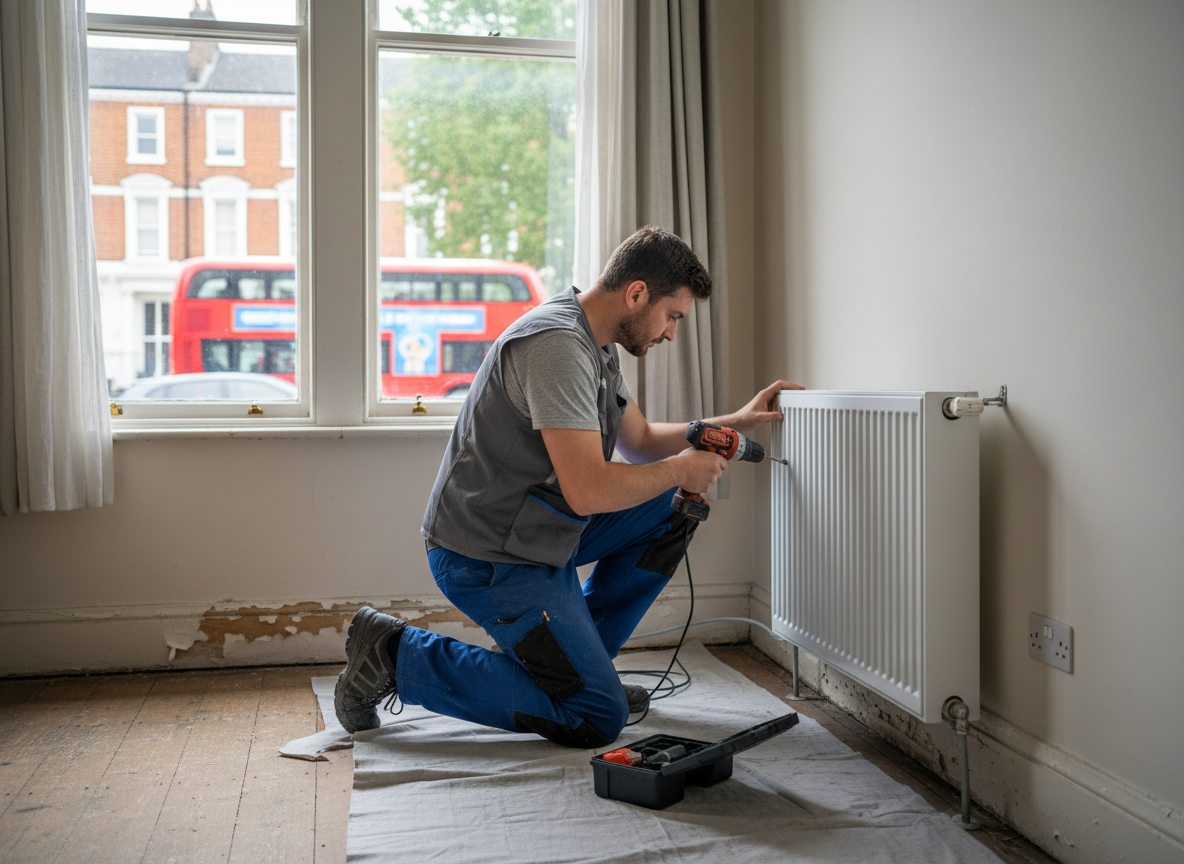
London's housing stock presents specific challenges for electric radiator work. Victorian terraces in areas such as Lambeth and Southwark often retain original wiring that lacks capacity for modern loads, while Edwardian conversions around Westminster Bridge frequently have shared risers and limited consumer units. Damp from the Thames and poor loft insulation in these buildings means radiators must be positioned to counter heat loss through single-glazed sash windows and solid walls. Installers routinely check for asbestos in older ceilings before running new cables and must account for the higher humidity that accelerates corrosion on metal casings.
Suitable materials include oil-filled or dry-element radiators with built-in thermostats rated for continuous use in unheated hallways. In properties near the river, we prefer models with IPX4 ratings to handle condensation. Edge cases include listed buildings where external trunking is prohibited, forcing internal chasing that risks disturbing original plasterwork. Current Part P and Building Regulations require certification for any new circuit; we always verify existing earth bonding in pre-1960s stock before connection. Overloading a ring circuit remains the most common failure point when homeowners request additional units without a dedicated supply.
Installation timing matters in London winters when temperatures drop and demand spikes. We schedule around peak hours to avoid disrupting neighbours in converted flats. Proper mounting on uneven lath-and-plaster walls demands extra fixings, and we always leave access points for future maintenance. Homeowners should expect a full survey first, as many assume existing sockets suffice when they do not.
Technician insight
In London, the thing that catches most people out with electric radiator installer jobs is the state of the wiring in pre-1930s terraces around Westminster and Southwark. Homeowners expect a straight swap, yet we regularly discover ring circuits already near capacity that require a new dedicated supply from the consumer unit before any radiator can be added safely.
Lambeth Victorian Terrace
Owner reported cold spots on the upper floor. Inspection revealed original 1950s wiring unable to support additional load and single-skin walls losing heat rapidly. We installed two oil-filled radiators on a new 20A circuit with individual thermostats. Heating became consistent and the system passed inspection without further works.
How it works
- 1
Initial Survey
Assess existing wiring, consumer unit capacity and wall construction at the property in London.
- 2
Circuit Planning
Design dedicated supply routes that comply with Part P while minimising disruption to original features.
- 3
Installation
Mount radiators, run new cabling and connect controls suited to the building's heat-loss profile.
- 4
Testing And Handover
Verify load, thermostat function and safety devices before demonstrating operation to the client.
Pricing
Upfront quotes issued after survey; final cost depends on number of units, circuit upgrades needed and access constraints typical of London period properties.