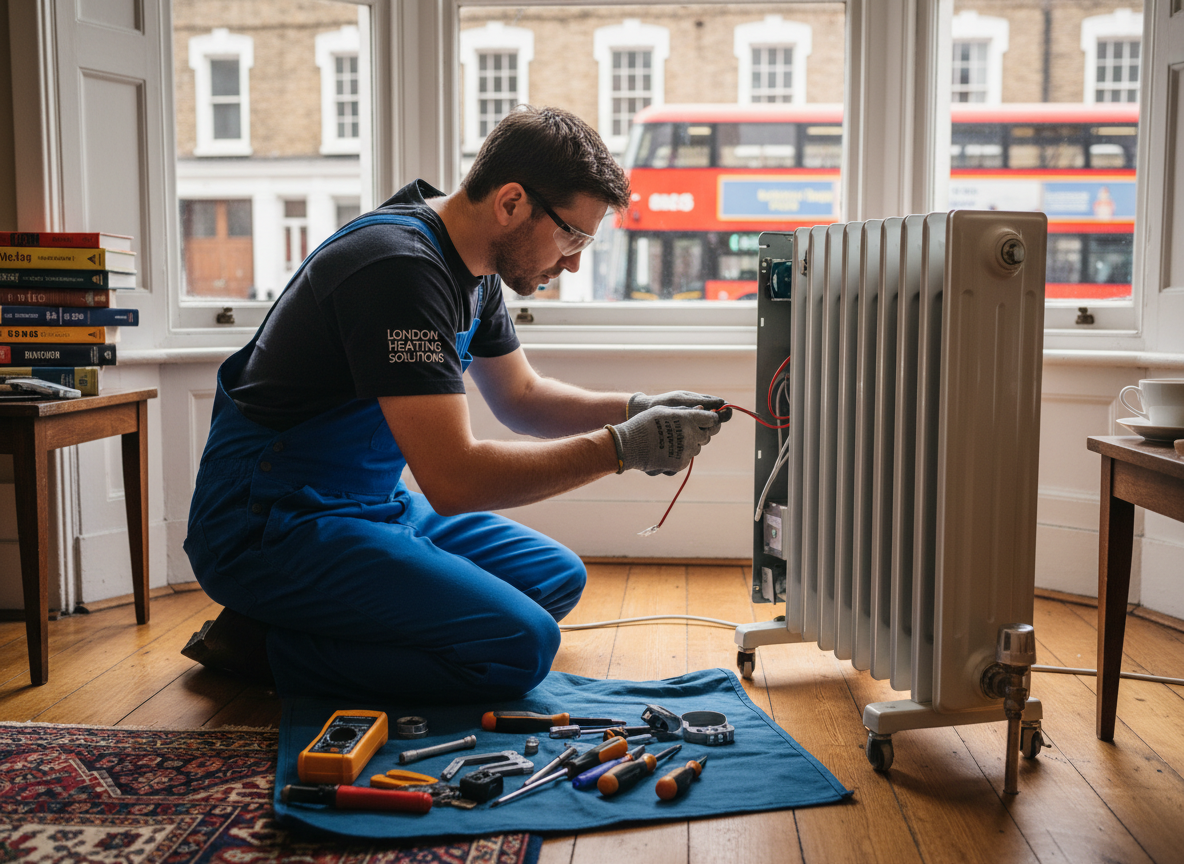
London's housing stock, especially terraces and mansion blocks around Westminster and the South Bank, often features 19th-century wiring runs that were never designed for modern electric radiators. When a radiator fails, the issue frequently traces back to corroded connections or overloaded circuits hidden behind plaster. Our technicians trace the full circuit from the consumer unit outward rather than swapping the unit alone, because a new radiator on aged cable simply shifts the fault elsewhere.
Damp winters in the capital push electric systems harder than in drier regions. Condensation in unheated voids around SE1 and neighbouring boroughs accelerates terminal corrosion and trips RCDs. We carry marine-grade stainless elements and IP-rated junction boxes as standard replacements because standard parts fail again within two seasons here. Access is another constraint: many properties have radiators boxed into alcoves or behind kitchen units, requiring careful removal of original joinery without damaging period features.
Regulation compliance matters on every job. Any work that touches fixed wiring must meet the latest BS 7671 requirements and be notified where necessary. We isolate the circuit, test earth continuity and insulation resistance before re-energising, then leave a minor works certificate. Homeowners in converted flats often discover that previous repairs bypassed the consumer unit entirely; we flag these immediately because they create both safety and insurance issues.
Edge cases include three-phase supplies in larger Georgian conversions and shared risers in blocks where one faulty radiator can affect neighbours. We carry phase rotation testers and keep records of which properties share supplies so we can isolate correctly without cutting power to multiple flats.
Technician insight
In London, the thing that catches most people out with Electric radiator repair service is the state of the original wiring in Victorian and Edwardian terraces around Westminster and SE1. Damp winters rot terminals and the old rubber insulation cracks, so the fault is rarely just the radiator itself.
Westminster Terrace Fault
A top-floor flat in a Westminster terrace lost heating on the coldest week of the year. We found the supply cable had been routed through an unventilated roof void where condensation had corroded the terminals. We replaced the damaged run with new cable clipped to the joists, fitted a new IP-rated element and restored heating the same afternoon without disturbing the original cornice.
How it works
- 1
Initial Assessment
We arrive within hours, isolate the circuit and test voltage, earth and insulation at the radiator and consumer unit.
- 2
Fault Diagnosis
Full circuit tracing identifies whether the fault lies in the element, thermostat, wiring or supply cable.
- 3
Component Replacement
We fit compatible elements, controls or cable runs using parts suited to London's damp conditions and older wiring.
- 4
Testing and Certification
After reassembly we re-test the circuit, issue a minor works certificate and demonstrate safe operation to the client.
Pricing
Upfront quotes provided after inspection; final cost depends on access, parts required and whether additional wiring work is needed.