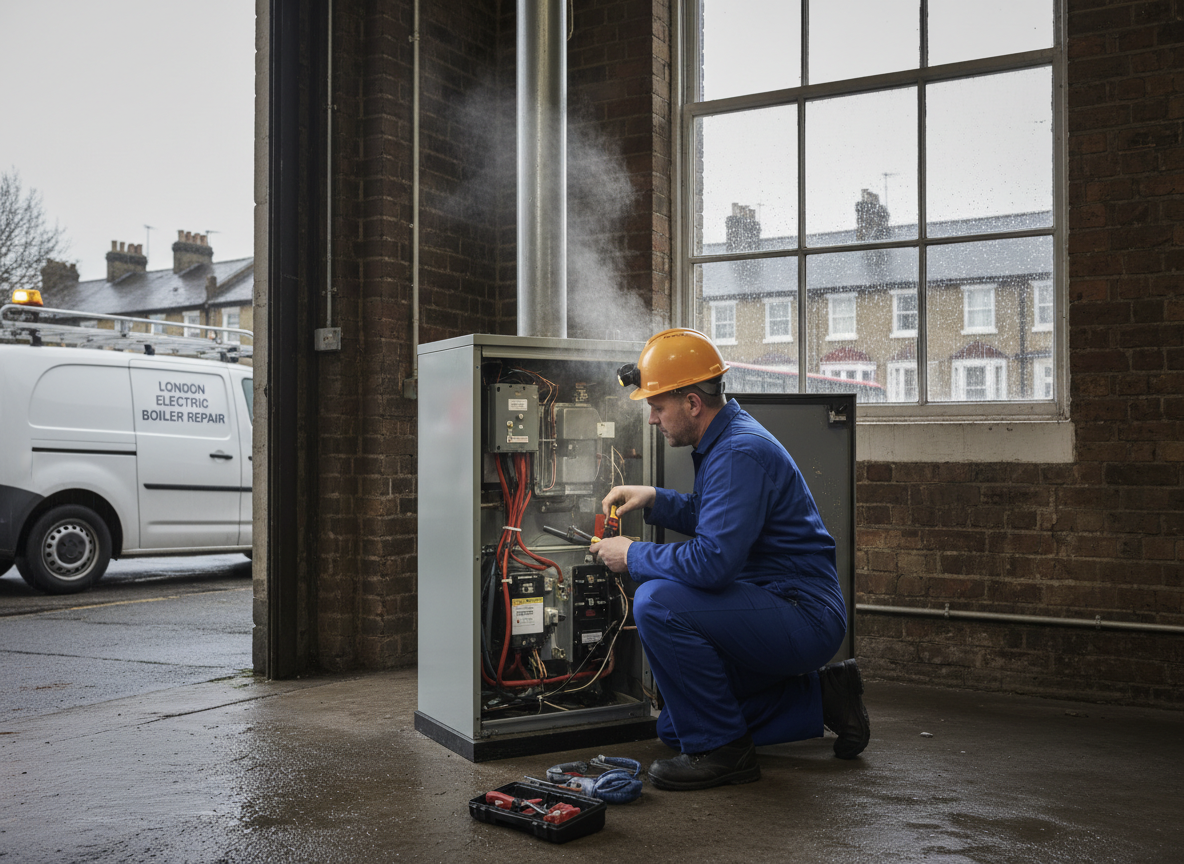
London's older housing stock, particularly Victorian terraces and Edwardian conversions around Westminster, Southwark and Lambeth, often features original or poorly upgraded electrical systems that make electric boiler failures more frequent during winter cold snaps. Hard water from the Thames supply accelerates scale buildup on heating elements, while cramped plant rooms in converted flats limit access for standard repairs. Technicians must navigate these constraints without disturbing neighboring properties in tightly packed streets.
Sudden breakdowns commonly stem from thermostat failures, corroded immersion heaters or tripped breakers caused by damp conditions in basement installations common to SE1 postcodes. Emergency calls peak when overnight temperatures drop below freezing, as many properties lack secondary heating. Work requires isolating the system safely, checking for earth faults in aging cabling, and confirming compliance with current Part P regulations before restoring power.
Response from the 24/7 base at 11-12 Whitehorse Mews allows quick reach to central London addresses via Westminster Bridge Road, avoiding delays from river crossings or congestion. Replacement parts must match the exact voltage and cylinder type found in each property, as mixing modern controls with legacy tanks can create further faults. Every job includes a full system test to prevent repeat callouts in the same cold spell.
Technician insight
In London, the thing that catches most people out with emergency electric boiler repair is the mix of original wiring and cramped plant rooms in Victorian terraces around Westminster and Southwark. Cold snaps expose earth faults and scale that standard replacement parts won't fix without extra time tracing circuits.
Night-time Failure in a Westminster Conversion
A resident in a converted SE1 terrace lost heating on a freezing January evening. Inspection revealed a seized immersion heater and degraded wiring behind the cylinder. The element was swapped and the circuit isolated safely, restoring hot water and heating before morning.
How it works
- 1
Initial Call and Dispatch
Answer the 24/7 line, gather boiler model and symptoms, then dispatch the nearest van from the SE1 base.
- 2
On-Site Diagnosis
Isolate power, inspect the immersion heater, thermostat and wiring for faults common in older London stock.
- 3
Repair or Part Replacement
Replace failed components with compatible parts, addressing scale or wiring issues found during inspection.
- 4
System Test and Handover
Restore power, run full heating cycle, and confirm safe operation before leaving the property.
Pricing
Upfront quote given after inspection with no call-out fee applied to the final repair cost.