2026-10-23 ·
Fixing Uneven Heat in Victorian Terraces Across Islington and Hackney
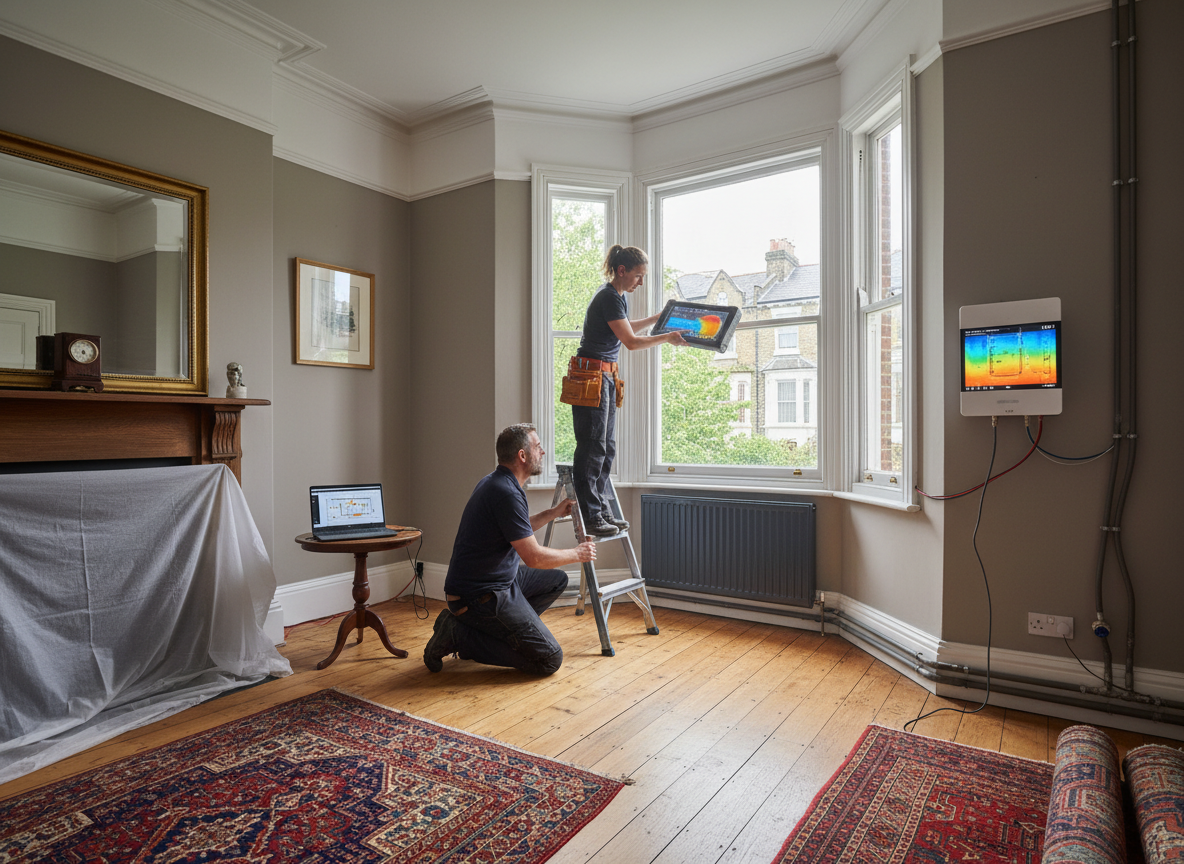
Victorian terraces across Islington and Hackney commonly show uneven heat because solid brick walls and original fireplaces create cold zones that standard central systems cannot reach evenly. Installing zoned electric panel heaters or high-retention storage units in the coldest rooms corrects the imbalance within one heating season.
Diagnosing Cold Spots in Islington Terraces
Walk each floor of a typical Hackney or Islington terrace at dawn when overnight temperatures have dropped. Note which rooms stay below 18 °C while others reach 21 °C; sash windows and chimney breasts are the usual culprits. Measure wall surface temperatures with an infrared thermometer—differences of 4 °C or more indicate where heat is escaping through uninsulated brick. Check for blocked air bricks or disused fireplaces that pull cold air downward. These readings guide precise placement of new electric radiators rather than blanket upgrades.
Choosing and Positioning Electric Heaters for Solid-Wall Homes
Electric panel heaters mounted on internal walls deliver steady output without the need for pipe runs that older terraces lack. In rooms over 4 m long, two 1.5 kW units spaced 3 m apart prevent the hot-spot-and-cold-corner pattern common with single large heaters. Storage heaters placed under windows offset the chill from original sash frames while taking advantage of cheaper overnight tariffs. Pairing either option with basic draught-stripping on doors reduces heat loss enough to cut run times by 20 %. See choosing panel heaters or storage heaters for properties without gas in Zone 2 for sizing tables matched to London terrace floor plans.
Repair Steps Before Full Replacement
Start by testing existing electric radiators for element failure or thermostat drift, common after 12–15 years in damp London basements. Clean fins and check wiring at the consumer unit before adding new circuits. Where one room consistently lags, adding a 2 kW electric radiator on its own 13 A spur often balances the system without disturbing original plasterwork. For persistent issues, electric heating repair services can isolate faulty zones before any larger install. Always verify that new units carry thermostatic controls with 0.5 °C increments so each floor can be set independently.
Preparing Systems for London Winter Patterns
Hackney and Islington terraces lose heat fastest on clear, still nights when external temperatures fall below 5 °C. Pre-winter checks include confirming that storage heater bricks retain charge for at least 8 hours and that panel heater fans are free of dust. Adding reflective foil behind radiators on external walls reflects 10–15 % more heat back into the room. Review the full checklist in preparing electric heating systems before London winter temperatures drop so systems are ready when the first cold snap arrives. These steps keep terraces comfortable without overspending on electricity.
When to Call for On-Site Assessment
If temperature differences exceed 5 °C between ground and first floor after heater upgrades, book a visit from an installer familiar with SE1-based stock. They can map heat loss through party walls shared with neighbouring terraces and recommend whether high-heat-retention units or additional electric radiators will close the gap. A same-day assessment often identifies simple fixes like relocating a thermostat away from a draughty hallway.