2026-10-23 ·
Choosing Panel Heaters or Storage Heaters for Properties Without Gas in Zone 2
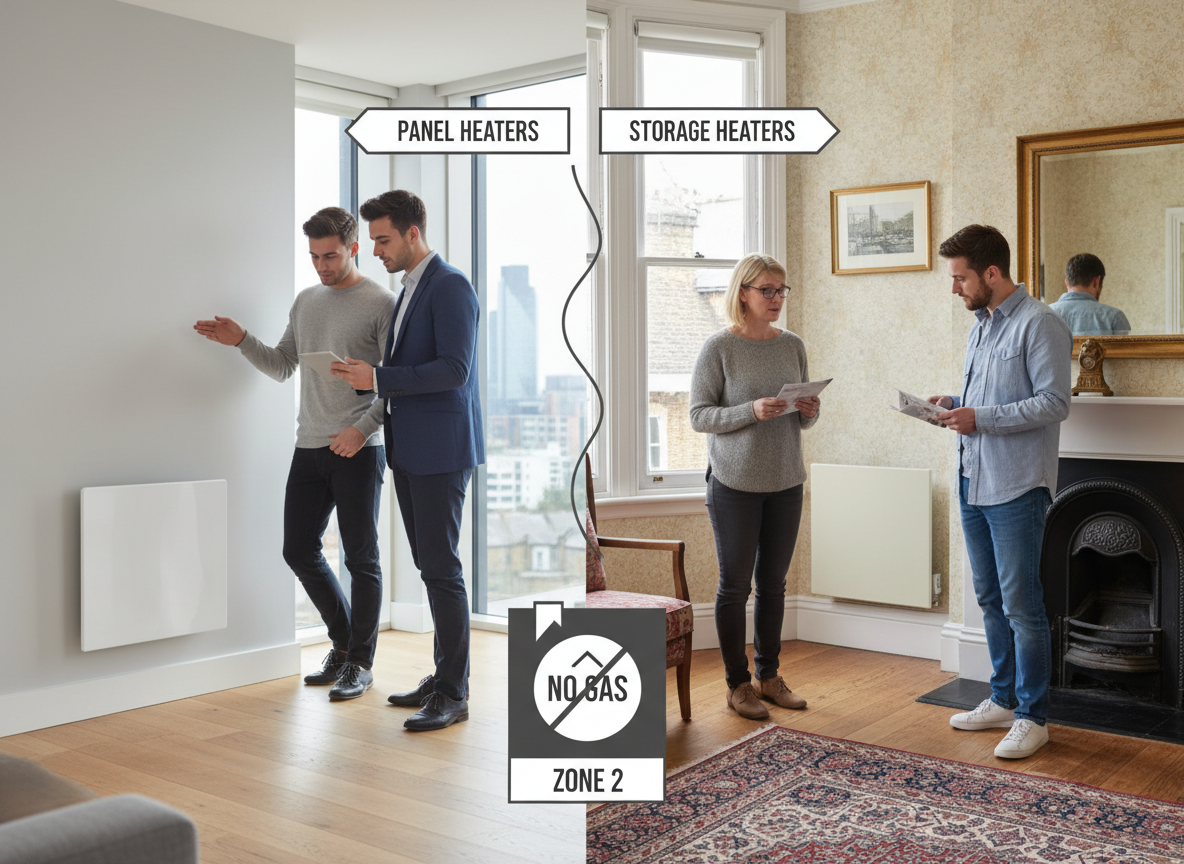
For properties without gas in Zone 2, panel heaters provide faster response in smaller rooms while storage heaters deliver lower running costs on Economy 7 tariffs across larger Victorian terraces and conversions.
Matching Heater Type to Zone 2 Housing Stock
Zone 2 covers areas such as parts of Southwark, Lambeth and Islington where many homes are Victorian terraces or Edwardian conversions built before central heating. These solid-wall properties lose heat quickly through single glazing and uninsulated floors. Panel heaters work well in compact flats because they reach temperature within minutes and pair with smart controls. Storage heaters suit larger floor plans when residents can charge overnight on cheaper rates and release heat during the day. The choice often depends on whether the property has good loft insulation and whether the occupants are home during peak daytime hours.
Running Costs and Tariff Realities in London
Economy 7 tariffs in the London area typically charge 15–18p per kWh during the day and 8–10p overnight. A 2.0 kW panel heater running four hours daily adds roughly £25–£30 per week in winter. A comparable storage heater charged for seven hours off-peak and releasing stored heat can cut that figure by 30–40 %. However, storage units weigh 80–120 kg and require a dedicated 24-hour supply cable plus a separate off-peak circuit. Properties in converted warehouses around SE1 often lack the spare consumer unit space, making panel heaters the simpler retrofit.
Installation Practicalities for Older London Buildings
Electricians fitting heaters in Zone 2 terraces must route cables through lime plaster walls and around original cornicing without damage. Panel heaters mount on external walls with minimal disruption and need only a standard 13 A spur. Storage heaters demand reinforced floor support in upper-storey rooms and careful positioning away from doorways to avoid blocking heat release. Both systems benefit from individual room thermostats to prevent overheating in south-facing rooms that gain solar warmth. For full details on fitting these units see the electric panel heater installer and storage heater installer pages.
Preparing Systems Before Winter Temperatures Drop
London winters regularly reach 0–3 °C at night with wind-driven rain that increases heat loss through single-glazed sash windows. Residents should test existing heaters in October and replace units showing element failure or cracked casings. Adding 50 mm of external wall insulation behind new heaters reduces heat-up time by up to 25 %. Linking controls to weather-compensating sensors helps storage heaters adjust charge periods automatically. See our guide on preparing electric heating systems before London winter temperatures drop for a full checklist.
When to Consider Alternatives in Victorian Terraces
Some Islington and Hackney terraces suffer persistent cold spots on north-facing walls even after heater upgrades. In these cases high-heat-retention radiators or targeted underfloor mats in bathrooms often outperform both panel and storage options. The article fixing uneven heat in Victorian terraces across Islington and Hackney outlines diagnostic steps and typical retrofit layouts used in the area.