2026-10-23 ·
How to Calculate Running Costs for Electric Heating in London Homes
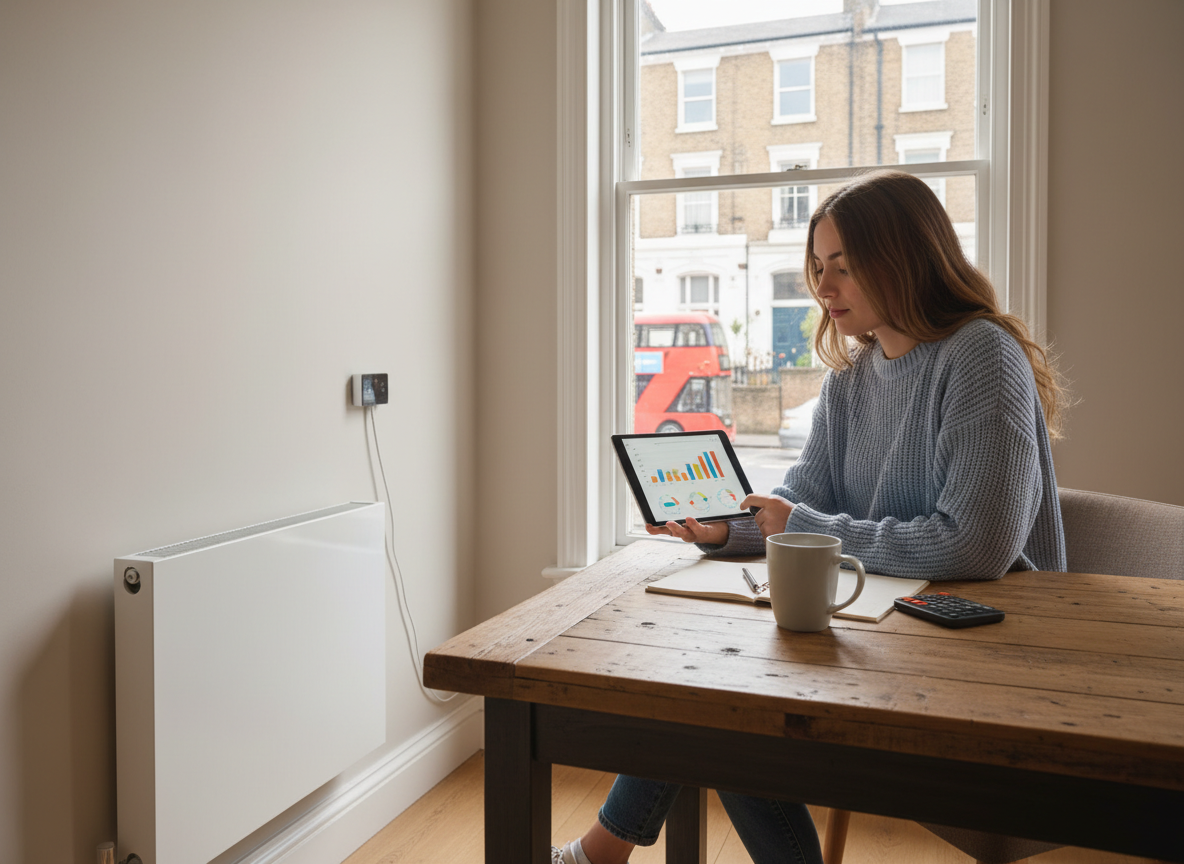
Running costs for electric heating in London homes are calculated by multiplying a heater's kW rating by daily hours of operation and the local electricity tariff, typically producing monthly winter figures between 180 and 450 pounds for a two-bedroom flat once insulation and usage patterns are factored in.
Understanding Electricity Tariffs in London
London households usually pay between 0.24 and 0.30 pounds per kWh on standard variable tariffs, with Economy 7 or 10 rates offering cheaper night-time units that benefit storage heaters. Check your latest bill for the exact pence-per-kWh figure because small changes multiply quickly across 8-12 hours of daily winter use. Victorian terraces common in Westminster and Southwark lose heat faster than modern builds, so the same 2 kW panel heater can cost 15-20 percent more to run than in a post-2000 apartment. Track seasonal rate rises that often occur in October when demand increases across the capital.
Calculating Daily and Monthly Usage
Start with the heater label showing kW output, multiply by hours of use, then by your tariff rate to reach pence per day. A 1.5 kW radiator running six hours costs roughly 1.5 times 6 times 0.28, equalling 2.52 pounds daily or 75 pounds monthly. Add multiple heaters across living rooms and bedrooms, then factor in thermostat settings that cycle the units rather than running continuously. Record actual meter readings for two weeks in January to refine the estimate beyond theoretical sums.
Factors Affecting Costs in London Properties
Older London stock built before 1930 often features single-glazed sash windows and solid walls that increase heat loss, pushing running costs higher than in newer Zone 2 flats. South-facing rooms receive more passive solar gain on clear winter days, reducing afternoon heater demand. Damp conditions near the Thames can affect how efficiently some heaters maintain temperature. Properties without gas connections in areas such as parts of Lambeth rely entirely on electric systems, making accurate cost tracking essential for budgeting.
Comparing Different Electric Heating Types
Panel heaters provide instant heat but cost more per hour than high-heat-retention models that store warmth for later release. Storage heaters paired with off-peak tariffs can cut bills by 30 percent compared with continuous panel operation in the same property. See our guide on Choosing Panel Heaters or Storage Heaters for Properties Without Gas in Zone 2 for side-by-side running cost examples. Underfloor systems spread heat evenly yet require longer warm-up times that affect total daily kWh.
Practical Steps to Lower Running Costs
Review the article Preparing Electric Heating Systems Before London Winter Temperatures Drop for insulation and timer adjustments that reduce wasted energy. Set thermostats to 18-20 degrees Celsius and close internal doors to limit heated volume. Replace older manual controls with programmable models available through residential electric heating installers to match output precisely to occupancy patterns. Regular filter cleaning on fan-assisted units maintains efficiency and prevents higher electricity draw.